
 Photo: © Thierry Martinez
Mobius Pro
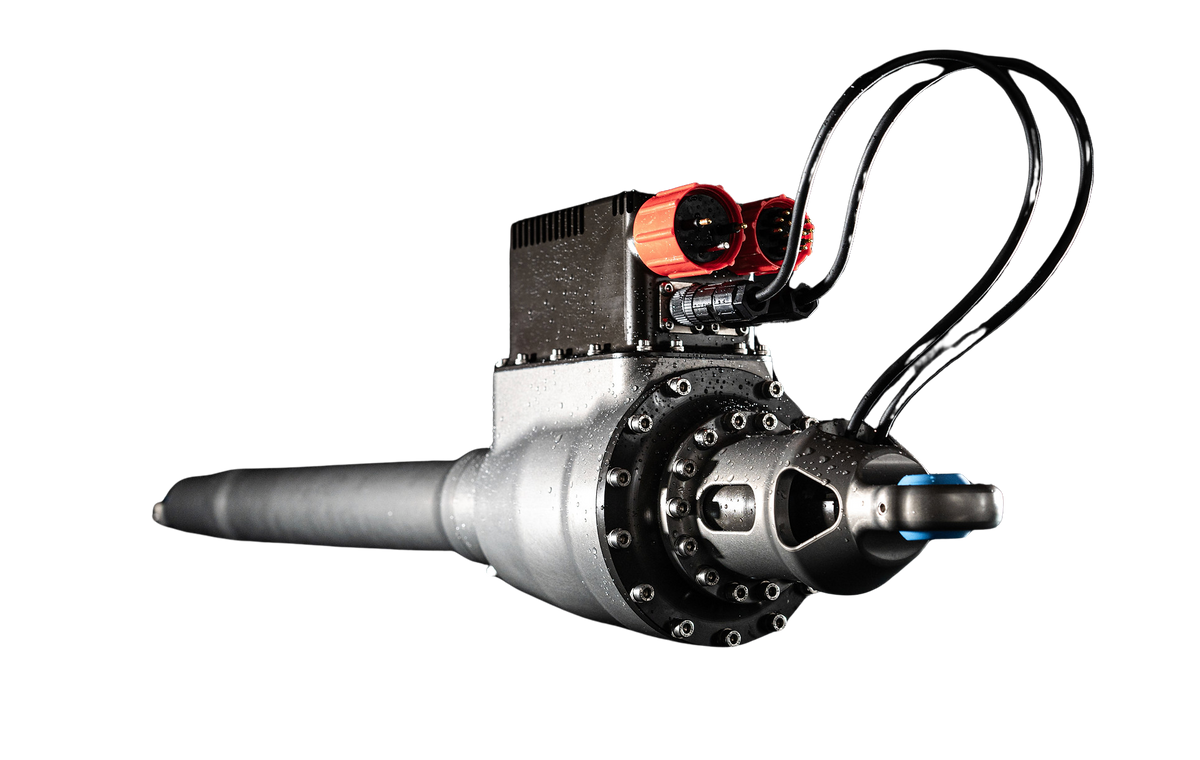
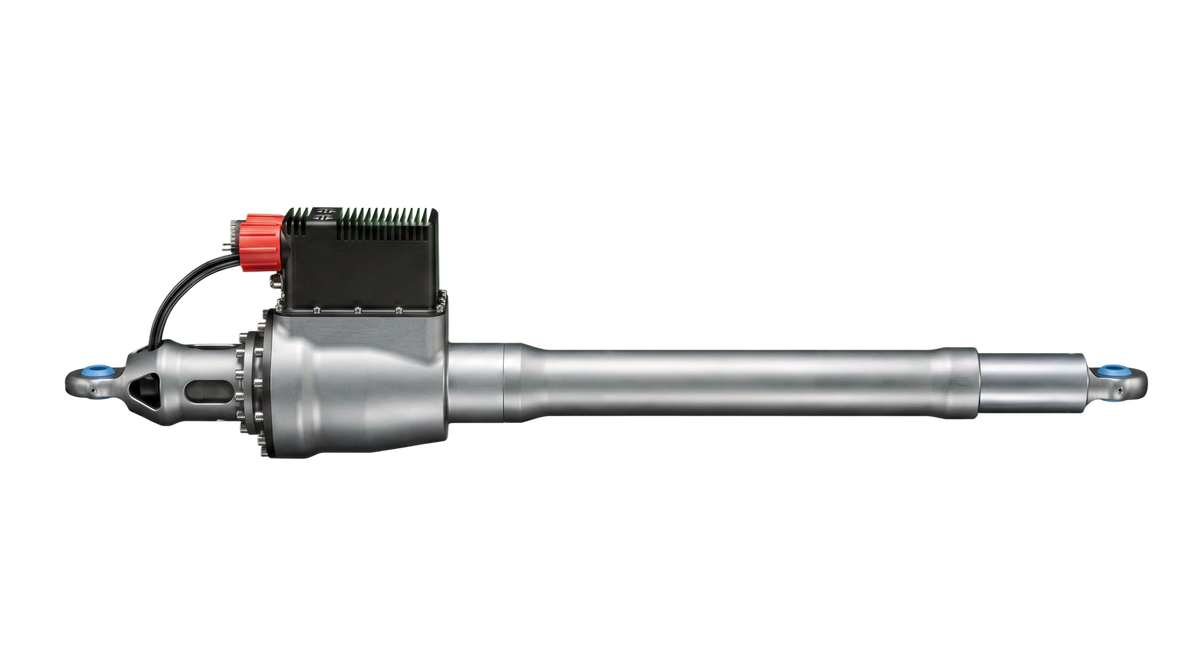
Mobius Pro is an electromechanical steering actuator designed for Ultim, IMOCA and Ocean Fifty programmes. It executes commands from the boat's autopilot. Stroke, motor, controller, screw and mounts are specified for each boat.
Fast A short response time to autopilot commands.
Powerful Responsive even under high steering loads.
Configurable Stroke, motor, controller, screw and mounts to suit the programme.
Stroke, force, mounts, power supply and interfaces are specified for the proposed configuration and confirmed in the quote.
Our engineers assess compatibility with the autopilot and the boat’s steering geometry. Adaptations and timing are detailed in the proposal.
Custom engineering Our engineers also design actuators for specific needs.

Electromechanical actuator for the boat’s autopilot
Mobius Pro
Describe your Mobius Pro configuration
Series
PRO P3 series. Select the elements of your configuration.
Controller
E25 electronics. Select one or more control interfaces.
Screw
Machined, ground, reversible ball screw. 99.5% efficiency.
Motor
Choose the M2 or M3 motor.
Some stroke lengths are not offered with the selected motor.
Stroke
175 mm and 300 mm strokes are available with both M2 and M3 motors.
Some stroke lengths are not offered with the selected motor.
Mounting
Specify the base and mid mounts separately. Our engineers will check the geometry against your drawings.
Rod end
Choose the rod-end interface. Final fit will be checked against the drawing.
Voltage
Select the onboard supply voltage. The 48 V version is coming soon.
Your configuration
Use this selection as the starting point for our technical discussion.
Mobius Pro
Compatibility, specifications and commercial terms have not yet been confirmed.
Request a callback
The Mobius Motion team will review your request and get back to you.
Step 1 / 8
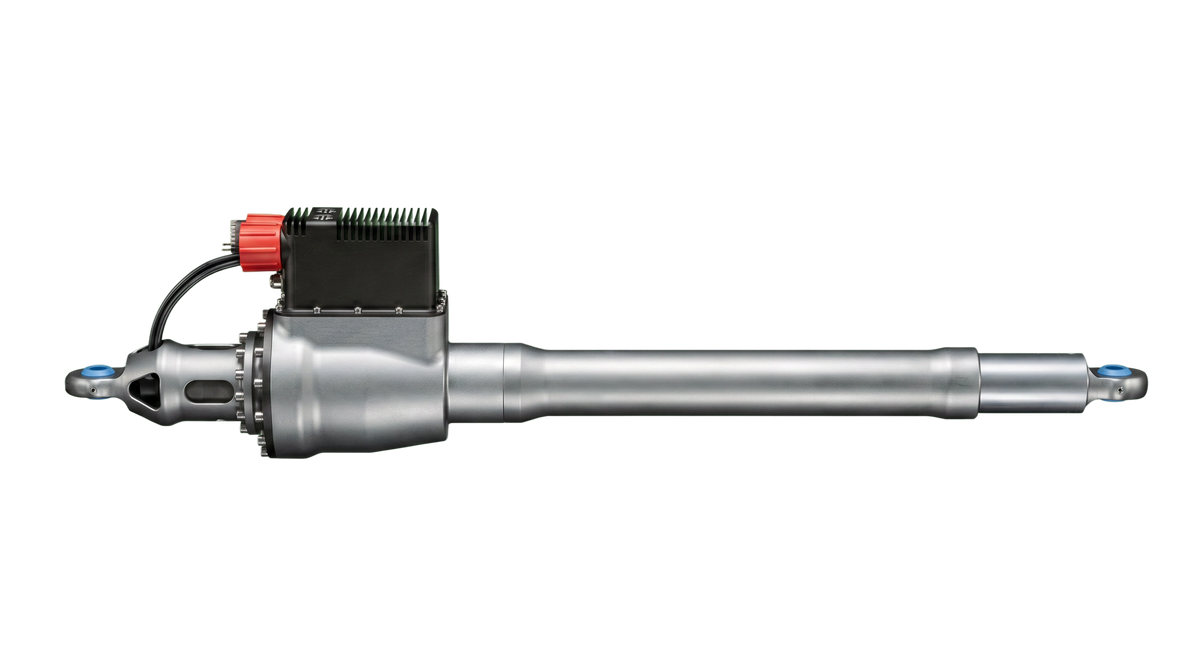
Motor, controller and sensors integrated.
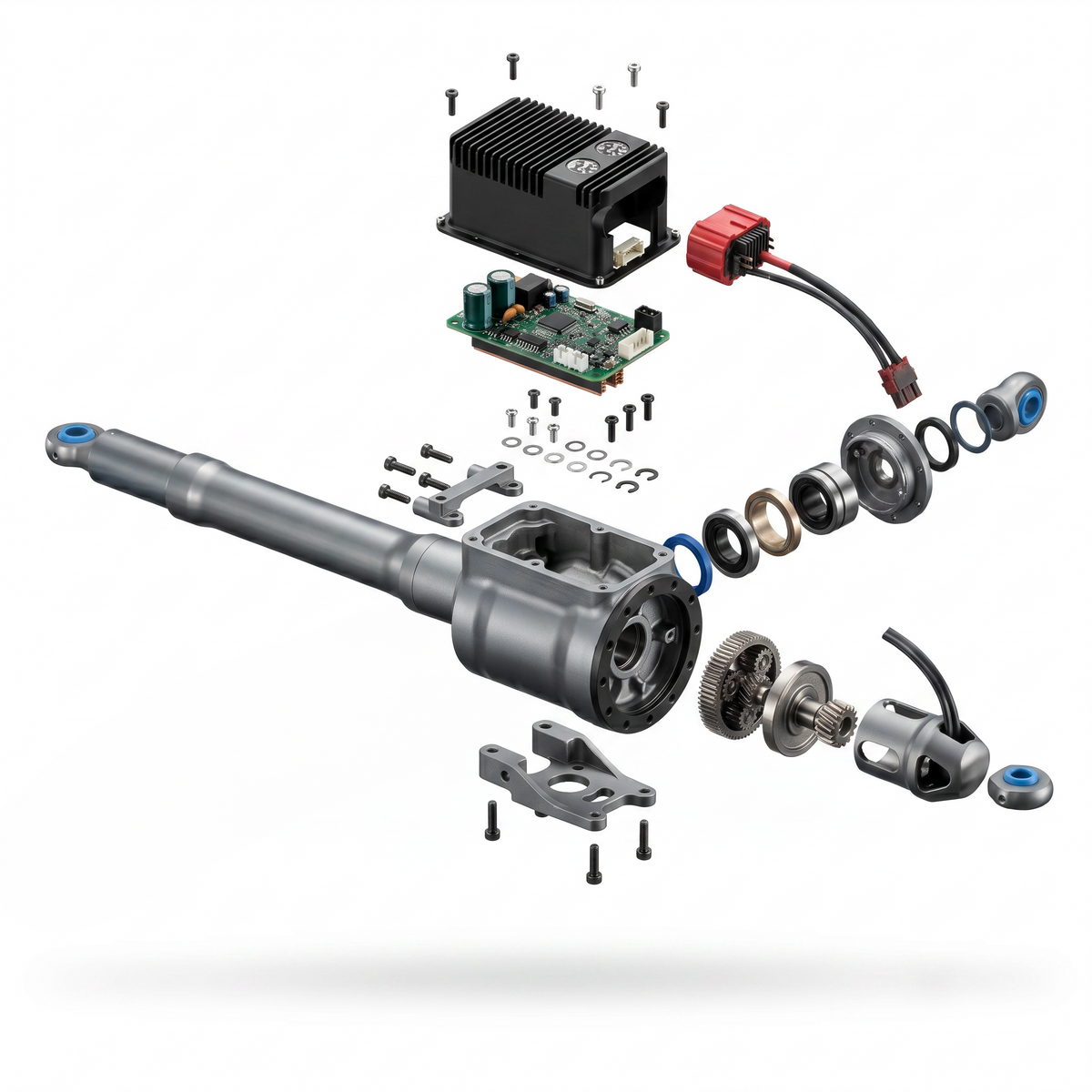
Mobius Pro combines an electric motor, its controller and position sensing. Stroke, screw, motor and mounts are selected to suit the boat's configuration.
Motor and control
Motion control is integrated into the electromechanical actuator.
Position sensing
Actuator position is used to follow the command received from the autopilot.
Stroke
Usable stroke is specified from the boat’s steering geometry.
Mounts
Mounting interfaces are studied with the boat’s technical team.
Speed, load and stroke: the data you need.
For each configuration, we specify stroke, available thrust, speed under load and power consumption, together with the measurement conditions.
MOBIUS PROThe steering actuator receives commands from the autopilot.
Rod speed measured under load, at a specified voltage and stroke. |
|
Continuous force, peak force and permissible duration for the selected configuration. |
|
Consumption measured over a defined steering cycle, with specified load and stroke. |
|
Geometry, power supply and control from the existing autopilot are checked before interfaces are defined. |
A configuration specified for your boat.
Steering layout, loads, stroke, power supply and the existing autopilot guide the choice of configuration.
Assess
Loads, stroke, layout, power and existing autopilot: we gather what matters before choosing a configuration.
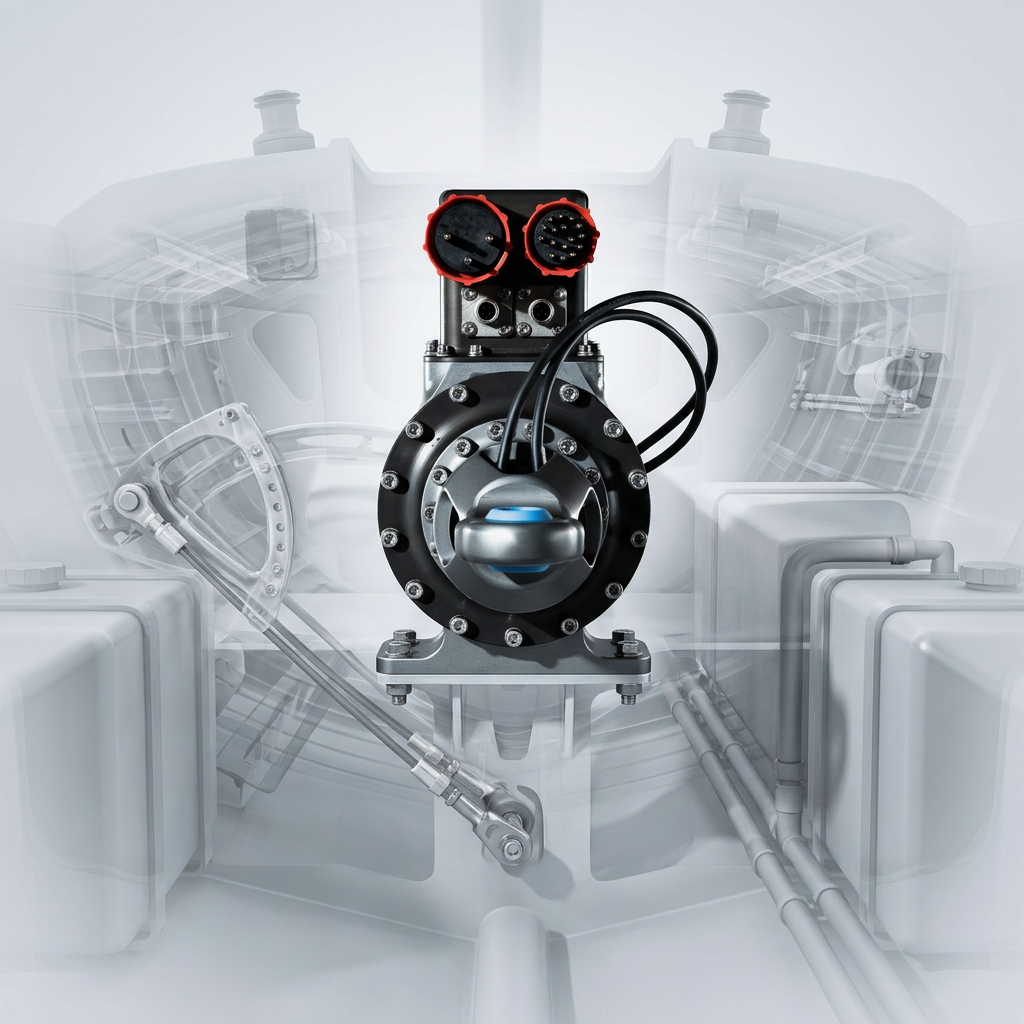
Prepare
Our engineers define the actuator, its interfaces and any adaptations with your technical team.
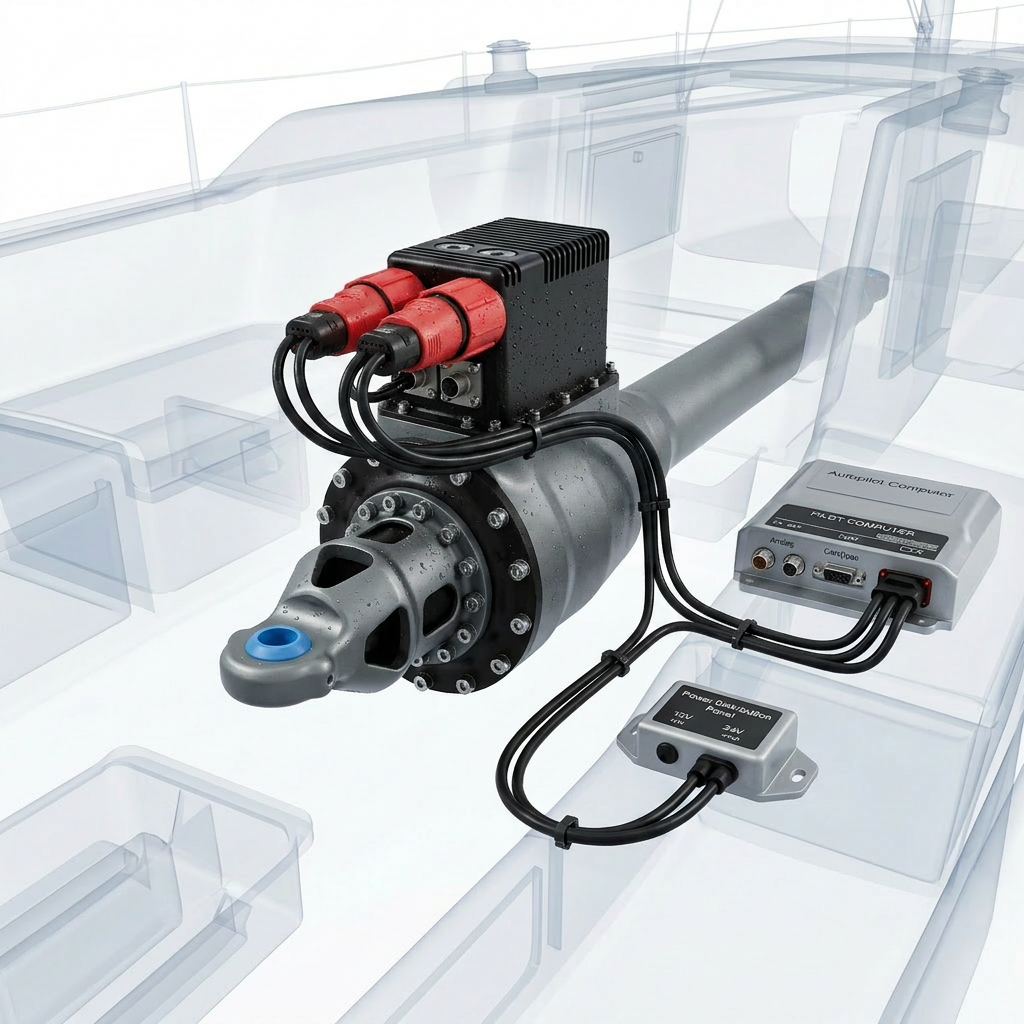
Install
Installation and commissioning are planned with the people who know the boat.
Designed for offshore racing.
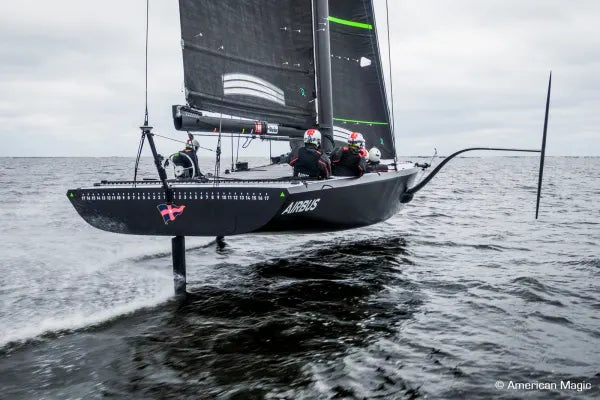
IMOCA
Charal has carried a Mobius Pro since 2025 on a B&G + Pixel autopilot line.
Ultim
SVR-Lazartigue has used a Mobius Pro since February 2023; Sodebo Ultim 3 installed one in 2025.
Ocean Fifty
Edenred 5 carries a Mobius Pro; Koesio uses a Mobius Motion actuator for its augmented electronic steering wheel.
Custom
Sails of Change: a custom rotary actuator for an onboard obstacle detection system.


Before taking Mobius Pro aboard.
Actuator role, compatibility, installation and sizing: answers to help plan your project.
THE ACTUATOR AND AUTOPILOT
Mobius Pro is an electromechanical steering actuator designed for offshore racing. It receives commands from the onboard autopilot and turns them into mechanical movement at the steering linkage.
No. The autopilot processor determines course corrections; Mobius Pro executes its commands at the steering linkage. Sensors, processor, controls and onboard network remain separate parts of the system.
Steering loads and the pace of corrections demand a suitable mechanical response. Mobius Pro was designed to execute autopilot commands when the rudder is loaded, with stroke and force sized for the boat.
For programs where steering response and system endurance matter: offshore racing monohulls and multihulls, new builds or refits. Actuator choice depends on loads, geometry, available power and the installed autopilot, not simply the boat class.
Mobius Pro is presented here as a steering actuator. Our engineers can design other custom linear or rotary actuators for these applications; the steering actuator does not control all these systems on its own.
AUTOPILOT AND COMPATIBILITY
Compatibility is confirmed for a specific installation, not an entire brand. We review the processor, power unit, command and clutch signals, rudder feedback, power supply and safety systems before proposing an interface.
Send us the processor and power unit references and the autopilot schematic. Our engineers assess available signals and any adaptations before confirming the installation.
Do not assume so. The network may carry navigation data, but motor control, clutch and rudder feedback require an end-to-end verified architecture.
SIZING AND INSTALLATION
Send a dimensioned steering plan, travel and stops, lever arm, known loads, autopilot and power unit references, onboard voltage and wiring diagram. Dimensioned photos of the installation area help with the initial discussion.
Sometimes, after checking mount spacing, stops, alignment, joints, anchor strength and maintenance access. Mounts that look identical do not guarantee a direct replacement.
Only if the motion geometry and force calculation allow it. A longer arm reduces the force required from the actuator but increases the stroke needed for the same rudder angle; a shorter arm does the opposite.
The installation must avoid side loads and allow free movement at every steering angle. Anchors, cable routes, surroundings and access to mounts are part of the study. Installation follows the dimensioned drawing for the ordered configuration.
Such a project can be assessed, but the number of actuators depends on the mechanical linkage, autopilot architecture, loads and required redundancy. It cannot be determined from the number of rudders alone.
That is a refit to assess. Replacement calls for a review of mechanical sizing, power supply, controls and manual takeover. It is more than swapping one actuator for another.
The scope is agreed with the boat’s team in the proposal: study, supply, adaptations, fitting, wiring, setup and testing. Tuning the autopilot remains a separate step from fitting the actuator.
Check geometry and stops, direction of movement, clutch, rudder feedback, electrical protection and manual takeover. Sea trials then assess steering response under conditions representative of the program.
STEERING PERFORMANCE
Compare rod speed under the same load, permissible force and duration, usable stroke, energy consumed over the same cycle and thermal performance. Voltage, temperature and test setup must also match or be stated.
Time depends on the actual stroke used, steering load and power supply. To compare actuators, use the same stroke and load; a no-load time does not describe a maneuver at sea.
No. Faster steering response lets the system correct more quickly, but the effect on course also depends on the processor, settings, sensors, boat and sea conditions.
An energy saving can be quantified only with a comparable test: same load, stroke, voltage and correction profile. The assessment must cover the whole system, not one isolated actuator figure.
POWER AND SAFETY
Voltage and protection are confirmed for the proposed configuration in the integration file. Our engineers also check current peaks, cable sizes and voltage drop on board.
Not necessarily a dedicated battery. The electrical assessment must still cover current peaks, steering cycles and fluctuations in energy generation. Protection and backup strategy are defined with the boat’s architecture.
Behavior depends on the complete installation: autopilot, controls, clutch, alarms and backup power. These scenarios must be documented and tested on board; one universal safe position cannot be promised for every configuration.
Yes, a backup architecture can be studied from the specification stage. A second actuator, control paths, power, sensors and human takeover must be considered together: two actuators alone do not make the whole system redundant.
Mounts, joints, connectors, cables, seals and clutch operation should be checked according to use. The maintenance schedule and tasks for the delivered configuration are specified in its maintenance documentation.
CONFIGURATION AND PROJECT
Series, controller, screw, motor and stroke are defined in the Mobius Pro configuration. Available combinations, mounts and interfaces are confirmed by our engineers for the boat and program.
Yes, subject to a feasibility study. A dimensioned drawing, loads and mechanical interfaces help distinguish a Mobius Pro configuration from a custom development.
Price depends on the configuration, interfaces and services selected. After reviewing the boat, we provide a quote that separates the actuator, any adaptations and planned support.
Lead time is confirmed in the quote according to the configuration and program schedule. If a race deadline is approaching, tell us at the first discussion so we can plan the study, integration and tests.
Let's define your Mobius Pro.
Boat, autopilot, steering geometry, stroke and load: send these details to our engineering team so they can prepare your configuration.